
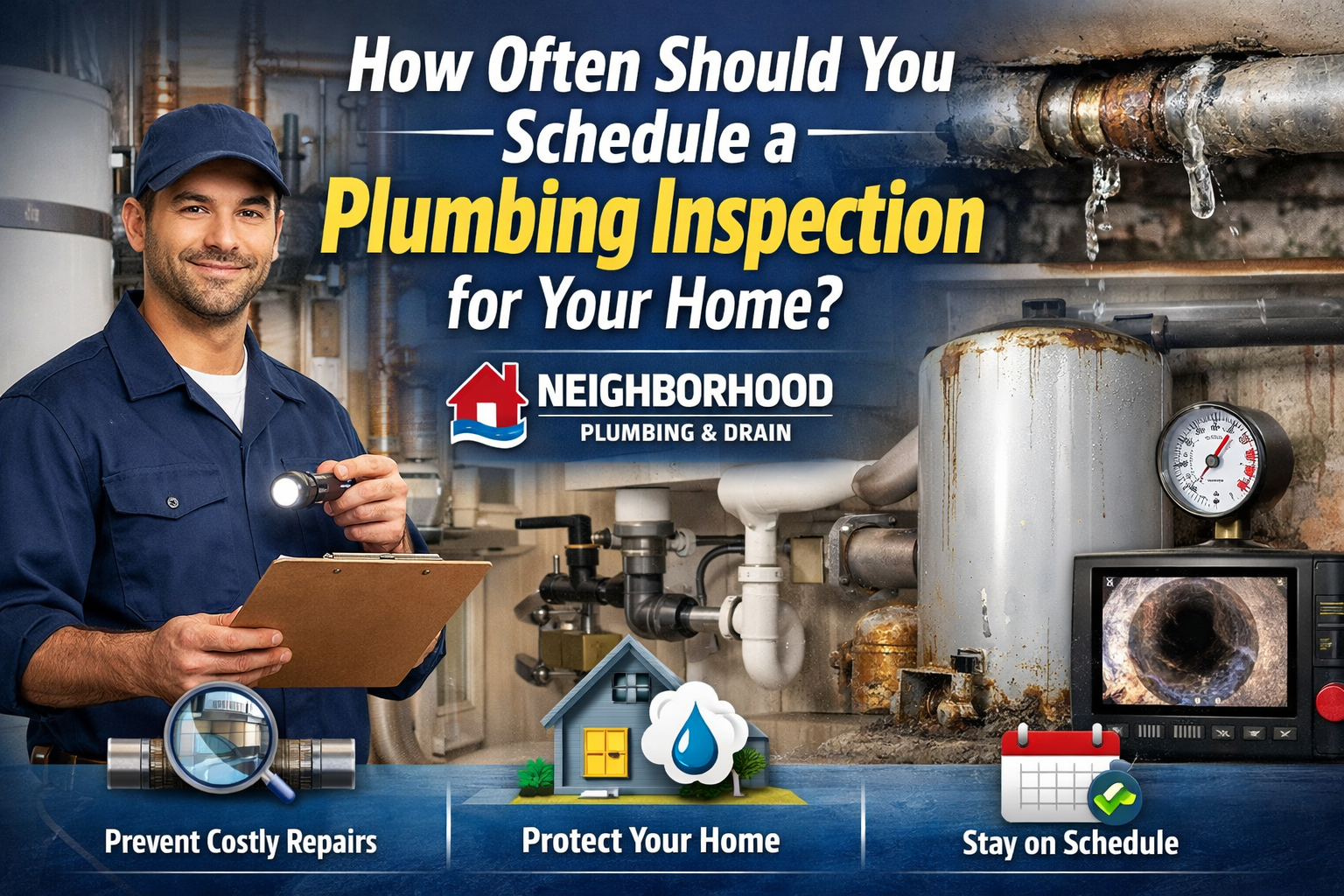
How Often Should You Schedule a Plumbing Inspection for Your Home?
Your home’s plumbing system works behind the scenes every single day—delivering clean water, removing waste, and protecting your property from leaks and water damage. Yet most homeowners don’t think about scheduling a plumbing inspection until there’s a visible problem.
At Neighborhood Plumbing & Drain, we often get asked: How often should you schedule a plumber inspection? The answer depends on your home’s age, plumbing materials, water quality, and overall usage. In this guide, we’ll explain what is a plumbing inspection, how often you should schedule one, and why regular plumbing inspections can save you thousands in repairs.
What Is a Plumbing Inspection?
Before discussing frequency, let’s clarify: what is a plumbing inspection?
A plumbing inspection is a comprehensive evaluation of your home’s plumbing system performed by a licensed professional. During a thorough inspection plumbing process, a technician examines:
- Water supply lines
- Drain and sewer lines
- Water heater
- Fixtures (faucets, toilets, showers)
- Pressure reducing valve (PRV)
- Shut-off valves
- Garbage disposal
- Outdoor hose bibs
- Visible piping for corrosion or leaks
Think of it as a full plumbing check up for your home—similar to an annual physical for your body.
The goal of plumbing inspections is to identify small issues before they turn into major, costly emergencies like slab leaks, burst pipes, sewer backups, or water heater failures.
How Often Should You Schedule a Plumbing Inspection?
1. Once Per Year (Recommended for Most Homes)
For the majority of homeowners, we recommend scheduling a plumber inspection once per year.
An annual plumbing check up helps:
- Catch hidden leaks early
- Identify high water pressure problems
- Prevent water heater breakdowns
- Detect early signs of pipe corrosion
- Ensure valves and connections are secure
In Central Texas—where hard water and high municipal PSI are common—yearly plumbing inspections are especially important to prevent premature wear on fixtures and appliances.
2. Every 6 Months (Older Homes or Hard Water Areas)
If your home is:
- Over 20 years old
- Built with aging galvanized, copper, or cast iron pipes
- Located in a hard water area
- Experiencing fluctuating water pressure
You may benefit from scheduling inspection plumbing services every 6 months.
Older homes are more prone to:
- Corrosion
- Pipe scaling
- Sewer line deterioration
- Failing shut-off valves
A semi-annual plumber inspection allows issues to be caught before they escalate.
3. Before Buying or Selling a Home
If you’re purchasing or listing a property, a professional plumbing inspection is critical.
For buyers, plumbing inspections provide:
- Peace of mind
- Negotiation leverage
- Awareness of hidden repairs
For sellers, a pre-listing plumbing check up can:
- Prevent surprises during escrow
- Increase buyer confidence
- Protect your asking price
4. After Major Plumbing Repairs
If you’ve recently had:
- Slab leak repairs
- Repiping
- Sewer line replacement
- Water heater installation
- PRV replacement
It’s wise to schedule a follow-up plumber inspection within a year to ensure the system remains stable and properly balanced.
What Happens During a Plumbing Inspection?
Homeowners often wonder what actually takes place during plumbing inspections. A professional plumbing inspection typically includes:
Water Pressure Testing
Excessive water pressure (above 80 PSI) can damage pipes, fixtures, and appliances. Your plumber checks pressure levels and evaluates your PRV.
Leak Detection
Visible and hidden leaks are checked around:
- Under sinks
- Behind toilets
- Around water heaters
- At hose bibs
- Near foundation areas
Water Heater Evaluation
Your technician inspects:
- Temperature settings
- Sediment buildup
- Anode rod condition
- Venting (for gas heaters)
- Connections and valves
Drain and Sewer Check
Depending on the home’s condition, a camera inspection may be recommended to evaluate:
- Root intrusion
- Blockages
- Pipe separation
- Bellied sewer lines
Fixture Functionality
Toilets, faucets, and showerheads are tested for:
- Proper flow
- Drips or leaks
- Slow drainage
- Mineral buildup
Shut-Off Valve Testing
Emergency shut-offs are tested to ensure they operate correctly when needed.
Signs You Should Schedule a Plumbing Inspection Immediately
While annual plumbing inspections are ideal, some warning signs indicate you shouldn’t wait:
- Sudden spike in water bills
- Low water pressure
- High water pressure
- Slow drains in multiple areas
- Water stains on walls or ceilings
- Moldy or musty odors
- Rust-colored water
- Unusual noises in pipes
If you notice any of these issues, scheduling a plumber inspection promptly can prevent serious structural damage.
The Cost of Skipping Regular Plumbing Inspections
Many homeowners delay inspection plumbing services to save money. Unfortunately, this often leads to much higher expenses.
Here’s what can happen without regular plumbing check ups:
- A small leak becomes a slab leak
- High water pressure bursts a supply line
- Sediment buildup destroys your water heater
- Minor corrosion leads to whole-home repiping
- A slow drain becomes a sewer backup
Preventative plumbing inspections are significantly less expensive than emergency repairs.
Benefits of Scheduling Regular Plumbing Inspections
1. Protect Your Home’s Structure
Undetected leaks can damage:
- Drywall
- Flooring
- Cabinets
- Foundations
Routine plumbing inspections protect your investment.
2. Extend the Life of Appliances
Water heaters, dishwashers, and washing machines last longer when water pressure and mineral buildup are properly managed.
3. Improve Water Efficiency
Leaks waste thousands of gallons of water annually. A plumbing inspection helps identify inefficiencies and reduce water bills.
4. Increase Property Value
Documented plumbing inspections demonstrate proper maintenance, which can increase resale appeal.
5. Reduce Emergency Repairs
The biggest benefit of a regular plumbing check up? Fewer late-night plumbing emergencies.
Plumbing Inspection Checklist for Homeowners
While a professional plumber inspection is always recommended, here are a few things homeowners can monitor between appointments:
- Check under sinks monthly for moisture
- Listen for running toilets
- Monitor your water bill
- Look for mineral buildup on fixtures
- Test your water pressure annually
- Flush your water heater (if recommended)
However, DIY checks are not a substitute for professional plumbing inspections.
How Hard Water Impacts Inspection Plumbing Needs
In areas with high mineral content in the water supply, plumbing systems experience accelerated wear. Hard water can cause:
- Pipe scaling
- Reduced water flow
- Faucet clogging
- Premature water heater failure
This makes routine plumber inspection services even more important in regions prone to mineral buildup.
Is a Plumbing Inspection Worth It?
Absolutely.
A typical plumbing inspection costs far less than:
- Slab leak repair
- Full home repiping
- Sewer line replacement
- Water damage restoration
Preventative maintenance is always more affordable than emergency service.
When Should You Combine Plumbing Inspections with Other Services?
Many homeowners bundle plumbing inspections with:
- Water heater maintenance
- Drain cleaning
- Sewer camera inspections
- PRV adjustments
- Water softener servicing
Combining services ensures your plumbing system is evaluated holistically.
Frequently Asked Questions
How long does a plumbing inspection take?
Most plumbing inspections take 20–60 minutes, depending on home size and system complexity.
Do new homes need plumbing inspections?
Yes. Even new construction can experience pressure issues, installation defects, or early fixture problems.
Can plumbing inspections detect hidden leaks?
Yes. Professional plumbers use pressure testing and diagnostic tools to uncover concealed issues.
The Bottom Line: How Often Should You Schedule a Plumbing Inspection?
For most homes:
- Once per year is ideal
- Twice per year for older homes or hard water areas
- Before buying or selling a home
- Immediately if warning signs appear
A consistent plumbing check up protects your home, your wallet, and your peace of mind.
Schedule Your Professional Plumbing Inspection Today
At Neighborhood Plumbing & Drain, we provide thorough, honest, and professional plumber inspection services designed to keep your home safe and efficient year-round.
Our licensed technicians carefully evaluate every aspect of your plumbing system—from pressure levels to drain performance—so you can avoid unexpected repairs.
Don’t wait for a leak to become a disaster.
Schedule your professional plumbing inspection today and give your home the protection it deserves.