
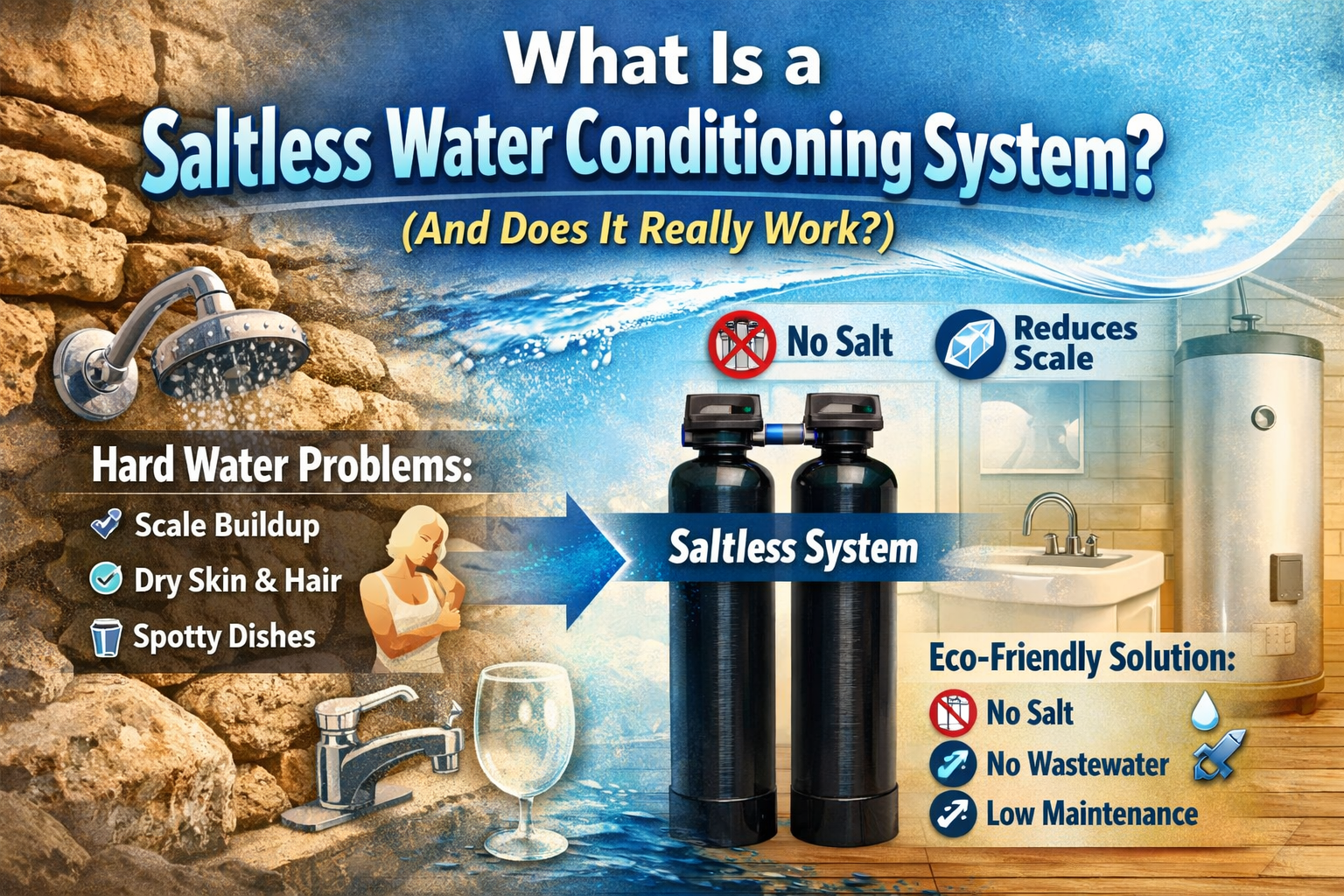
What Is a Saltless Water Conditioning System? (And Does It Really Work?)
If you live in Central Texas, you already know one thing for certain: our water is hard. From white scale buildup on faucets to dry skin after showering, mineral-heavy water is a daily frustration for homeowners in Lakeway, Bee Cave, Westlake, Georgetown, Austin, and surrounding communities.
As more homeowners look for solutions, one question comes up repeatedly:
What is a saltless water conditioning system—and does it actually work?
At Neighborhood Plumbing & Drain, we help homeowners compare salt free vs salt water softener systems every day. In this guide, we’ll break down how saltless water conditioning works, how it compares to traditional softeners, and whether it’s the right choice for your home.
Understanding Hard Water in Central Texas
Hard water contains high levels of calcium and magnesium. In areas like Lakeway and the Hill Country, mineral concentrations can be extremely high due to limestone geology.
Common hard water problems include:
- Scale buildup on faucets and showerheads
- White residue on dishes and glassware
- Reduced water heater efficiency
- Dry skin and dull hair
- Clogged pipes over time
That’s why so many homeowners search for the best water softener for bath comfort, appliance protection, and plumbing longevity.
What Is Saltless Water Conditioning?
A saltless water conditioning system (also called a template-assisted crystallization or TAC system) does not remove minerals from water. Instead, it alters the structure of calcium and magnesium minerals so they don’t stick to pipes and fixtures.
This process is commonly referred to as saltless water conditioning.
How It Works
- Water flows through specialized media inside the tank.
- The media converts dissolved hardness minerals into microscopic crystals.
- These crystals remain suspended in the water.
- Because they’re crystallized, they’re less likely to attach to plumbing surfaces.
Unlike traditional systems, there’s:
- No salt tank
- No regeneration cycle
- No brine discharge
- No electricity required (in most systems)
This makes saltless systems appealing to homeowners who want low maintenance and environmentally friendly options.
Salt Free vs Salt Water Softener: What’s the Difference?
This is the most common comparison we hear: salt free vs salt water softener — which one is better?
Let’s break it down clearly.
1. Traditional Salt-Based Water Softener
A salt-based water softener uses ion exchange to completely remove calcium and magnesium from your water.
How It Works:
- Hard water passes through resin beads.
- Calcium and magnesium ions are swapped for sodium ions.
- The system regenerates using salt.
This means the minerals are physically removed from the water.
Salt Free Water Softener vs Salt: Side-by-Side Comparison
When comparing salt free water softener vs salt, here’s what matters most:
| Feature | Salt-Based Softener | Saltless Conditioner |
| Removes Hardness Minerals | ✅ Yes | ❌ No |
| Prevents Scale | ✅ Yes | ✅ Yes (reduces adhesion) |
| Reduces Soap Scum | ✅ Yes | ⚠️ Limited |
| Uses Salt | ✅ Yes | ❌ No |
| Requires Regeneration | ✅ Yes | ❌ No |
| Electricity Required | Usually | Often No |
| Best for Extremely Hard Water | ✅ Yes | ⚠️ Sometimes |
Does Saltless Water Conditioning Really Work?
The honest answer? Yes—but it depends on your expectations.
Saltless systems:
✔ Help reduce scale buildup
✔ Protect plumbing and appliances
✔ Require minimal maintenance
✔ Avoid salty discharge into wastewater
But they do not:
✖ Make water feel silky or “soft”
✖ Remove hardness minerals
✖ Reduce soap scum as effectively
✖ Provide the same bathing comfort
If your goal is primarily protecting plumbing and appliances, saltless water conditioning can work well.
If your goal is improving how water feels in the shower, a traditional softener usually performs better.
Water Softener Salt Free: Who Is It Best For?
A water softener salt free system may be a good fit if you:
- Want low maintenance
- Don’t want to handle salt bags
- Have moderate (not extreme) hardness
- Want scale protection without sodium
- Live in an area with discharge restrictions
For environmentally conscious homeowners, the no-salt design is often appealing.
However, Central Texas water can be extremely hard. In many neighborhoods around Lakeway and Bee Cave, hardness levels may push saltless systems beyond their optimal performance range.
That’s why professional water testing is critical.
Salt vs Salt Free Water Softener: Which Is Better for Bathing?
One major deciding factor for homeowners is shower and bath comfort.
When choosing salt vs salt free water softener, ask yourself:
Do you want:
- Softer skin?
- Less soap usage?
- Silkier hair?
- Reduced scale on glass doors?
If so, a salt-based system generally provides a more noticeable improvement.
Many homeowners searching for a water softener for bath comfort are disappointed when they install a saltless system expecting that “slippery soft” feel.
Saltless systems protect plumbing—but they do not create that same bathing experience.
Cost Comparison: Upfront vs Long-Term
Saltless System
- Lower maintenance costs
- No salt purchases
- No regeneration water waste
- Minimal service needs
Salt-Based System
- Requires salt refills
- Periodic maintenance
- Slightly higher operating costs
- More dramatic water quality improvement
While saltless systems may cost less to operate, salt-based systems often provide greater overall performance in very hard water regions like Central Texas.
What About Appliance Protection?
Both systems help extend appliance life—but in different ways.
- Salt-based systems remove minerals entirely, preventing scale inside water heaters, dishwashers, and washing machines.
- Saltless systems reduce scale adhesion, meaning buildup is less likely—but not eliminated.
In homes with tank or tankless water heaters, mineral buildup is a serious issue. Many homeowners choose traditional softeners to protect expensive equipment.
Environmental Considerations
Saltless water conditioning appeals to homeowners who want:
- No salt discharge into wastewater
- No added sodium in water
- Reduced environmental footprint
- No regeneration cycles
Some municipalities restrict brine discharge, making saltless systems an attractive alternative.
However, Central Texas regulations typically still allow salt-based systems in residential applications.
The Hybrid Option: The Best of Both Worlds?
Some homeowners install:
- A salt-based softener for true mineral removal
- Combined with filtration or conditioning systems
This approach provides both scale protection and water feel improvements.
At Neighborhood Plumbing & Drain, we evaluate:
- Your water hardness level
- Household size
- Plumbing system age
- Appliance investment
- Bathing preferences
- Long-term goals
There is no one-size-fits-all solution.
Signs You Might Need a Water Treatment System
If you’re debating between salt free vs salt water softener, you may already be noticing:
- White buildup around faucets
- Reduced water heater efficiency
- Spots on dishes
- Soap not lathering well
- Frequent plumbing scale clogs
- Dry skin after bathing
These are all signs hard water is affecting your home.
Frequently Asked Questions
Is a saltless water conditioning system the same as a softener?
No. Saltless systems condition water but do not remove hardness minerals.
Does saltless water conditioning eliminate scale completely?
It reduces scale adhesion but does not remove minerals from water.
Is saltless better than salt?
It depends on your goals. For plumbing protection only, saltless may be sufficient. For bathing comfort and full mineral removal, salt-based systems are stronger.
Is salt water safe to drink?
Yes. The sodium added is typically minimal and safe for most households.
So… Which System Is Right for Central Texas Homes?
Because our water is extremely mineral-rich, most homeowners see better overall results from traditional salt-based systems.
However, saltless water conditioning can be effective for:
- Smaller households
- Moderate hardness areas
- Homes prioritizing low maintenance
The key is accurate water testing and professional guidance.
Why Professional Installation Matters
Improperly sized or installed systems—whether salt or saltless—won’t perform correctly.
At Neighborhood Plumbing & Drain, we:
✔ Test your water hardness
✔ Recommend properly sized systems
✔ Provide expert installation
✔ Offer ongoing maintenance guidance
✔ Serve Lakeway, Bee Cave, Westlake, Austin, Georgetown, and surrounding areas
We don’t push one solution—we recommend what actually fits your home.
Final Verdict: Does Saltless Water Conditioning Really Work?
Yes—but with limitations.
If you want true soft water for bathing and maximum scale prevention, salt-based systems are typically superior in Central Texas.
If you want minimal maintenance and scale reduction without salt, saltless water conditioning may work well.
Schedule a Water Evaluation Today
If you’re unsure which system is right for your home, let Neighborhood Plumbing & Drain help.
We’ll test your water, explain your options clearly, and install the right solution for long-term protection and comfort.
Call today to schedule your whole-home water evaluation and find the best water softener for bath comfort and plumbing protection.