
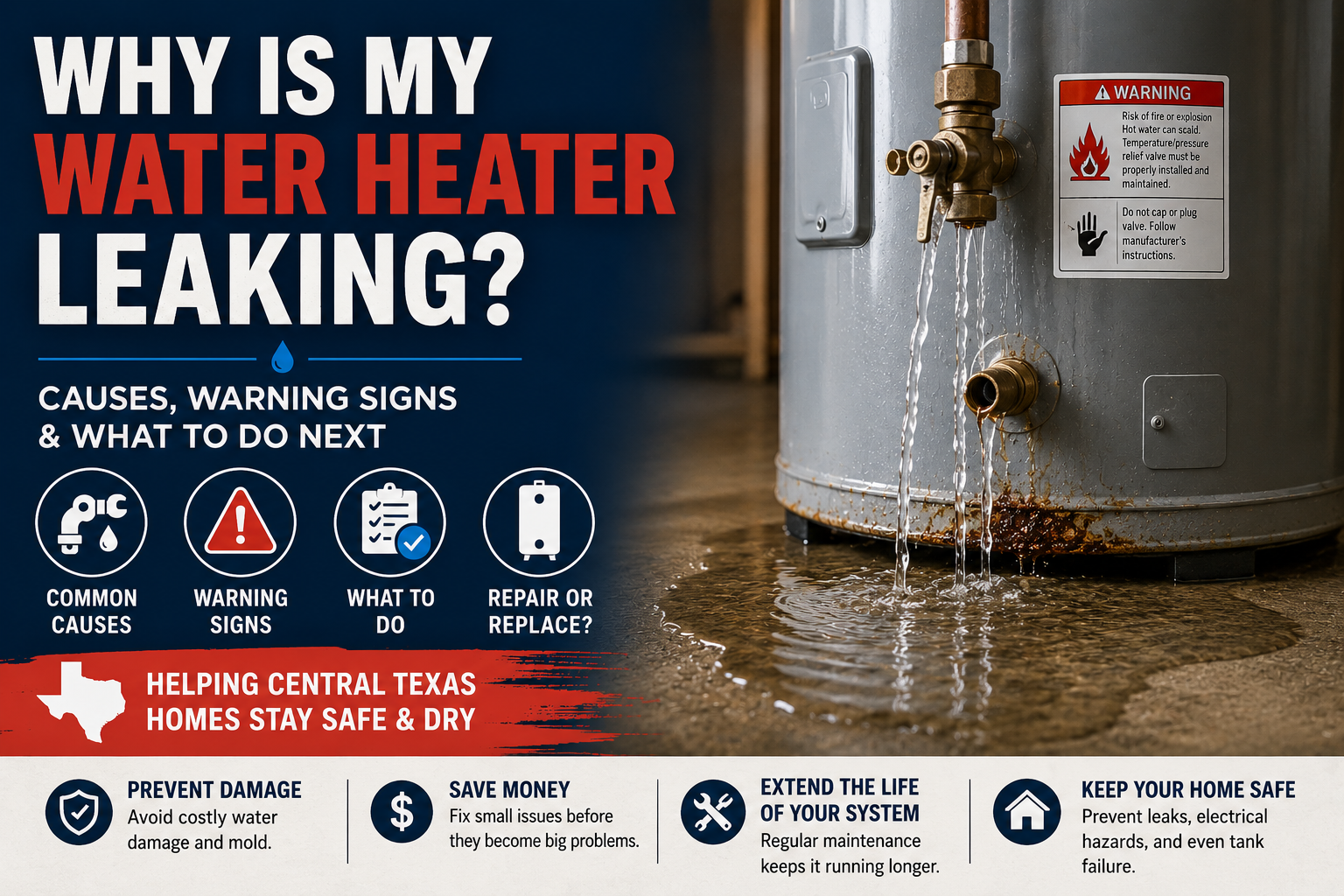
Why Is My Water Heater Leaking?
A Complete Guide for Texas Homeowners
A leaking water heater is one of the most common—and stressful—plumbing issues homeowners face. Whether it’s a small drip or a noticeable puddle, even minor leaks can quickly turn into major damage if ignored. If you’re asking, “Why is my water heater leaking?” you’re already taking the first step toward protecting your home.
In this guide, we’ll break down what causes a water heater to leak, how to identify the source, and when it’s time to call a professional. If you’re dealing with a hot water heater leaking, understanding the root cause can save you thousands in repairs and prevent unexpected breakdowns.
What Causes a Water Heater to Leak?
Water heaters are complex systems with multiple components that can fail over time. When a water heater leaking issue occurs, it’s usually tied to one of the following causes:
1. Loose or Damaged Connections
Your water heater has several inlet and outlet connections where water flows in and out. Over time, these fittings can loosen due to:
- Thermal expansion
- High water pressure
- Normal wear and tear
If your hot water heater leaks occasionally, a loose connection may be the culprit. These leaks often appear small at first but can worsen if not addressed.
2. Faulty Temperature & Pressure Relief (T&P) Valve
The T&P valve is a safety device designed to release pressure if your tank gets too hot or over-pressurized.
If it’s leaking, it could mean:
- The valve is defective
- Your water pressure is too high
- The tank is overheating
In Central Texas homes, high municipal water pressure is common, making this a frequent issue.
3. Corrosion Inside the Tank
One of the most serious answers to “what causes a water heater to leak” is internal corrosion.
Inside your tank is a sacrificial anode rod that prevents rust. Over time, this rod deteriorates. Once it’s depleted, the tank itself begins to corrode.
Signs include:
- Rust-colored water
- Metallic smell
- Visible tank leaks
Unfortunately, if corrosion is the cause, the only solution is usually water heater replacement.
4. Drain Valve Issues
The drain valve is located near the bottom of your tank and is used for maintenance, like flushing sediment.
Leaks here can occur if:
- The valve is loose
- Debris prevents proper sealing
- The valve is worn out
This is one of the easier fixes—but it should still be handled properly to avoid worsening the leak.
5. Sediment Buildup in the Tank
In areas like Central Texas, hard water leads to mineral buildup inside water heaters.
Over time, sediment collects at the bottom of the tank, causing:
- Overheating
- Increased pressure
- Tank damage
This buildup can lead to cracks or small leaks, especially in older units.
6. Cracked Storage Tank
If your hot water heater leaking issue is coming directly from the tank body, it’s often due to:
- Age (typically 8–12 years lifespan)
- Internal corrosion
- Structural stress
Once the tank itself cracks, repair is not an option—you’ll need a full replacement.
7. Issues with the Water Heater Pigtail
The water heater pigtail (flexible connector lines attached to the unit) is another common leak point.
These components can:
- Wear out over time
- Corrode due to mineral exposure
- Develop small cracks or pinhole leaks
If you notice water dripping from the top or sides near the piping, the pigtail may be the source.
Why Does My Hot Water Heater Leak Occasionally?
If your hot water heater leaks occasionally, it can be confusing. Intermittent leaks are often caused by:
- Thermal expansion: Water expands when heated, increasing pressure temporarily
- High water pressure spikes: Common in Texas homes
- T&P valve activation: Releasing excess pressure intermittently
These types of leaks may come and go, but they should never be ignored. They’re often early warning signs of a bigger issue.
Where Is the Leak Coming From?
To properly diagnose a water heater leaking issue, you need to identify the source. Here’s a quick breakdown:
Top of the Tank
- Loose inlet/outlet connections
- Faulty water heater pigtail
- Leaking T&P valve
Middle of the Tank
- Internal corrosion
- Tank failure
Bottom of the Tank
- Drain valve issues
- Sediment buildup
- Tank cracks
Pinpointing the location helps determine whether it’s a simple repair or a full replacement.
Is a Leaking Water Heater Dangerous?
Yes—ignoring a hot water heater leaking problem can lead to serious consequences:
- Water damage to floors and walls
- Mold growth in surrounding areas
- Electrical hazards (especially with electric units)
- Tank rupture in extreme cases
Even small leaks can escalate quickly, so it’s important to act fast.
What Should You Do If Your Water Heater Is Leaking?
If you notice a leak, follow these steps immediately:
1. Turn Off the Power
- Electric heater: Switch off at the breaker
- Gas heater: Turn off the gas supply
2. Shut Off the Water Supply
Locate the cold water shut-off valve above the unit and turn it off.
3. Identify the Leak Source
Check connections, valves, and the tank itself.
4. Call a Professional Plumber
While some minor issues can be fixed, most leaks require expert diagnosis to prevent further damage.
Can You Fix a Leaking Water Heater?
It depends on the cause:
Repairable Issues:
- Loose fittings
- Faulty valves
- Worn-out water heater pigtail
Non-Repairable Issues:
- Internal corrosion
- Cracked tank
- Severe sediment damage
If your unit is older and leaking, replacement is often the most cost-effective solution.
How to Prevent Water Heater Leaks
Preventative maintenance is key to avoiding leaks and extending the life of your system.
Annual Water Heater Flush
Removes sediment buildup and improves efficiency.
Inspect the Anode Rod
Replacing it every few years can prevent internal corrosion.
Check Water Pressure
Install or maintain a pressure reducing valve (PRV) to keep pressure within safe levels (typically 50–70 PSI).
Routine Inspections
A professional plumbing inspection can catch small issues before they turn into major leaks.
When Should You Replace Your Water Heater?
Consider replacing your unit if:
- It’s over 8–12 years old
- You notice rust or corrosion
- Leaks are coming from the tank
- Repairs are becoming frequent
If you’re unsure whether it’s time to repair or replace, it helps to understand the warning signs. Check out our guide on Signs you need a new hot water heater to learn how to spot failing systems before they break down completely.
Upgrading to a newer, more efficient model can also reduce energy costs and improve performance.
Why Water Heater Leaks Are Common in Texas
Central Texas homes face unique challenges that increase the risk of leaks:
- Hard water causes mineral buildup
- High water pressure stresses components
- Temperature fluctuations impact tank expansion
These factors make regular maintenance even more important for homeowners in areas like Lakeway, Austin, and Georgetown.
Trust Neighborhood Plumbing & Drain for Water Heater Repairs
If you’re dealing with a water heater leaking issue, don’t wait until it turns into a major problem. At Neighborhood Plumbing & Drain, we specialize in diagnosing and repairing all types of water heater issues—from minor leaks to full system replacements.
Our team understands the unique plumbing challenges Central Texas homeowners face, and we’re here to provide reliable, long-term solutions.
Final Thoughts
So, what causes a water heater to leak? The answer can range from simple fixes like loose connections to serious issues like tank corrosion. Whether your hot water heater leaks occasionally or is steadily dripping, it’s a sign that something isn’t right.
The key is early detection and professional evaluation. Addressing the issue quickly can prevent costly damage, extend the life of your system, and keep your home safe.
Ready to Fix Your Leaking Water Heater?
Don’t let a small leak turn into a big problem. Call Neighborhood Plumbing & Drain today at (737) 204-893 or schedule your service online.
Neighborhood Plumbing & Drain – Proudly Serving Lakeway, Austin, Georgetown, and the Central Texas community.